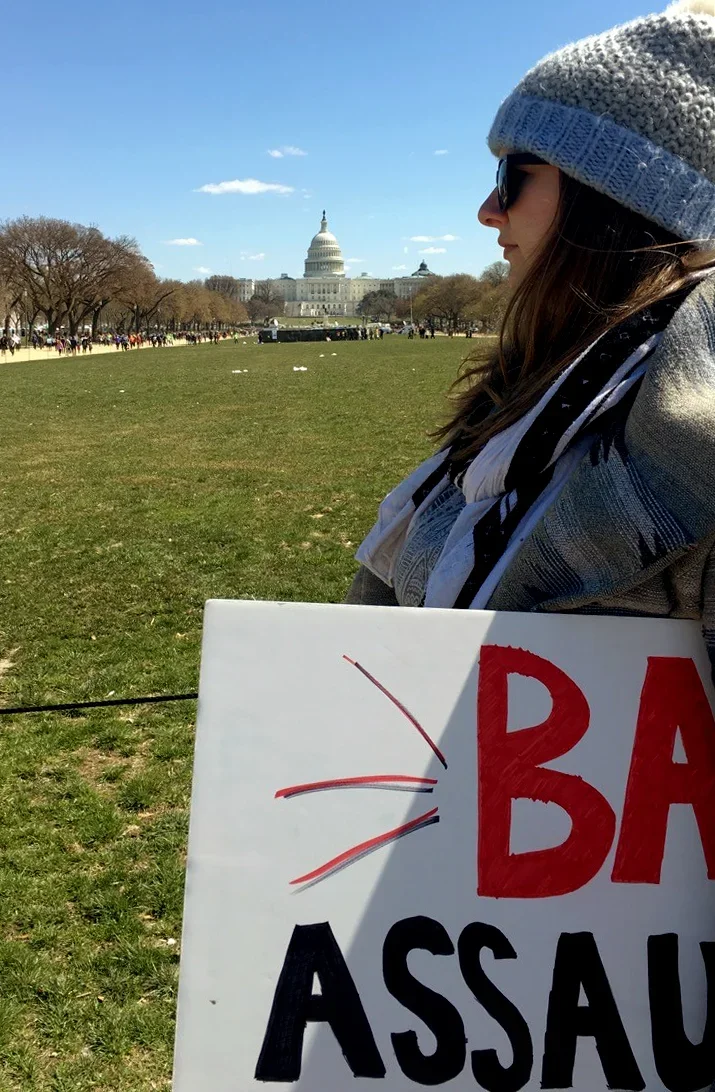
On Marching for Our Lives
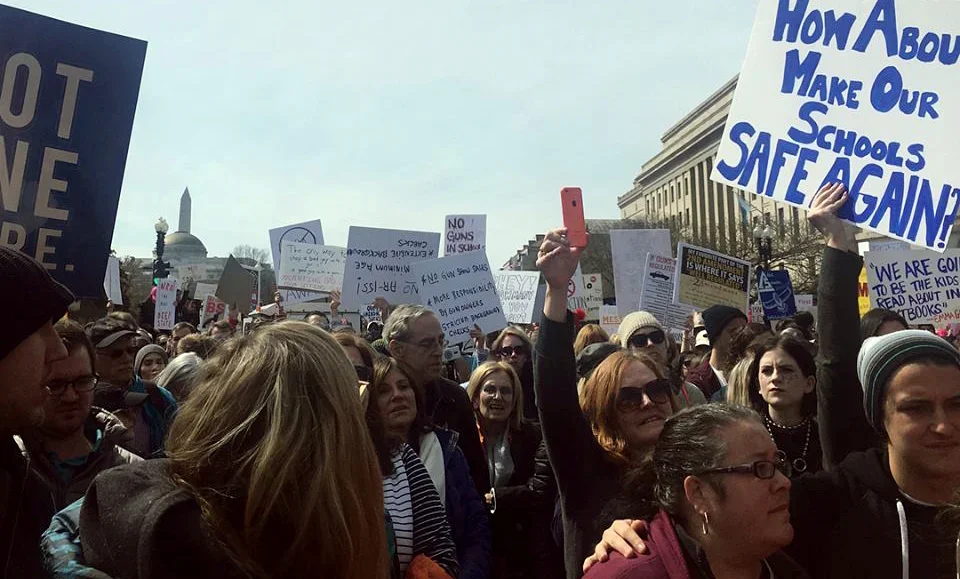
Protesters gathering near the speaker stage on Constitution Ave, Washington, D.C.
One of the social and political issues I’m most passionate about is common-sense gun regulation reform. However, yesterday I felt reluctant to join the quarter-million people descending upon D.C. to March for Our Lives. I had gone to bed the night before thinking, what good does it do just to show up and make noise? What's the point if it doesn’t change anything?
Now I remember: the point is simple – when people show up, it means there's still hope.
Samantha Fuentes, a teenage student survivor of the mass shooting at Marjory Stoneman Douglas HS, bravely took the stage to recount her experience. She detailed the rain of bullets in her classroom, bullets that struck her legs and lodged shrapnel in her face and behind her eyes. As she stated, "lawmakers and politicians scream, 'guns aren't the problem,' but can't look me in the eyes," she suddenly turned perpendicular to the podium microphone and spontaneously vomited onto the stage at her feet, then took a breath, wiped her chin, and courageously continued her harrowing plea for change.
Emma Gonzalez, also a student survivor of Stoneman Douglas HS, spoke only a few brief sentences, then silenced the hundreds of thousands of people gathered for a full 6 minutes and 20 seconds, the same amount of time it took for a senseless act to claim 17 lives in Parkland. It felt like an eternity.
Meanwhile, at home in Richmond, Maxwell Nardi of Douglas S. Freeman HS (a friend and former TEDxRVA intern) stood shoulder to shoulder with community leaders and lawmakers at the Virginia State Capitol before delivering a concise call to action for gun reform.
I'm grateful to the unstoppable force of young people who are refusing to stay silent, whose persistent message and energy will undoubtedly lead to real change, and remind me that as long as we are willing to show up, listen, and look them in the eyes, there is indeed still hope. I'm also grateful to the friends who keep me accountable to keep showing up even when my spirit wanes, and keep my feet firmly pounding pavement for change in honor of those who are no longer alive to do so.